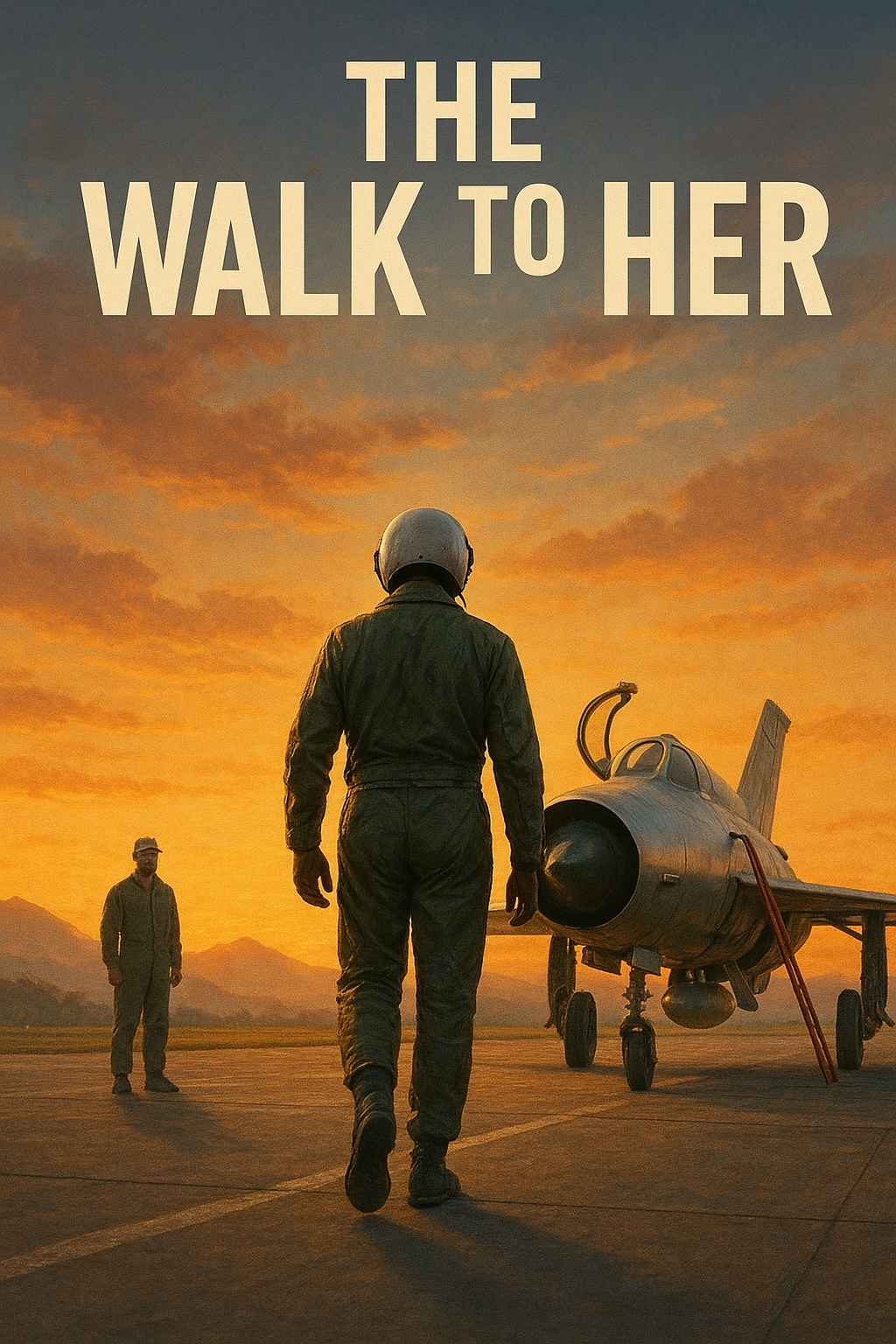
The paperwork was done, the final authorizations scribbled in blue ink. Yet the act of signing off that sortie sheet felt far heavier than the flimsy clipboard it rested on. To me, it was more than procedure; it was a contract, binding me not just to the Air Force but to the machine that waited for me on the dispersal line.
The crew chief, Sergeant Ramesh, stood beside me, his sun-darkened face creased with years of service. His overalls bore stains of oil and fuel, badges of countless dawns spent nursing jets awake. He took the clipboard back from me and gave a brief nod.
“All checks green, sir,” he said in his clipped, matter-of-fact tone. But then, softer, almost like a father whispering to a son, he added, “She’s ready. Take care of her, and she’ll take care of you.”
I looked at him and managed a small smile. “She’s in your hands when she’s on the ground, Ramesh. Up there… it’s all on me.”
He chuckled, the sound weary but warm. “Up there, sir, she listens only to the one at the stick. Just don’t pull her tail too hard. She bites back.”
We both knew the truth in those words. The MiG-21 was a stern mistress — sleek, sharp, unforgiving. She could make a man a fighter pilot in one sortie or humble him in the blink of an eye.
I turned toward her.
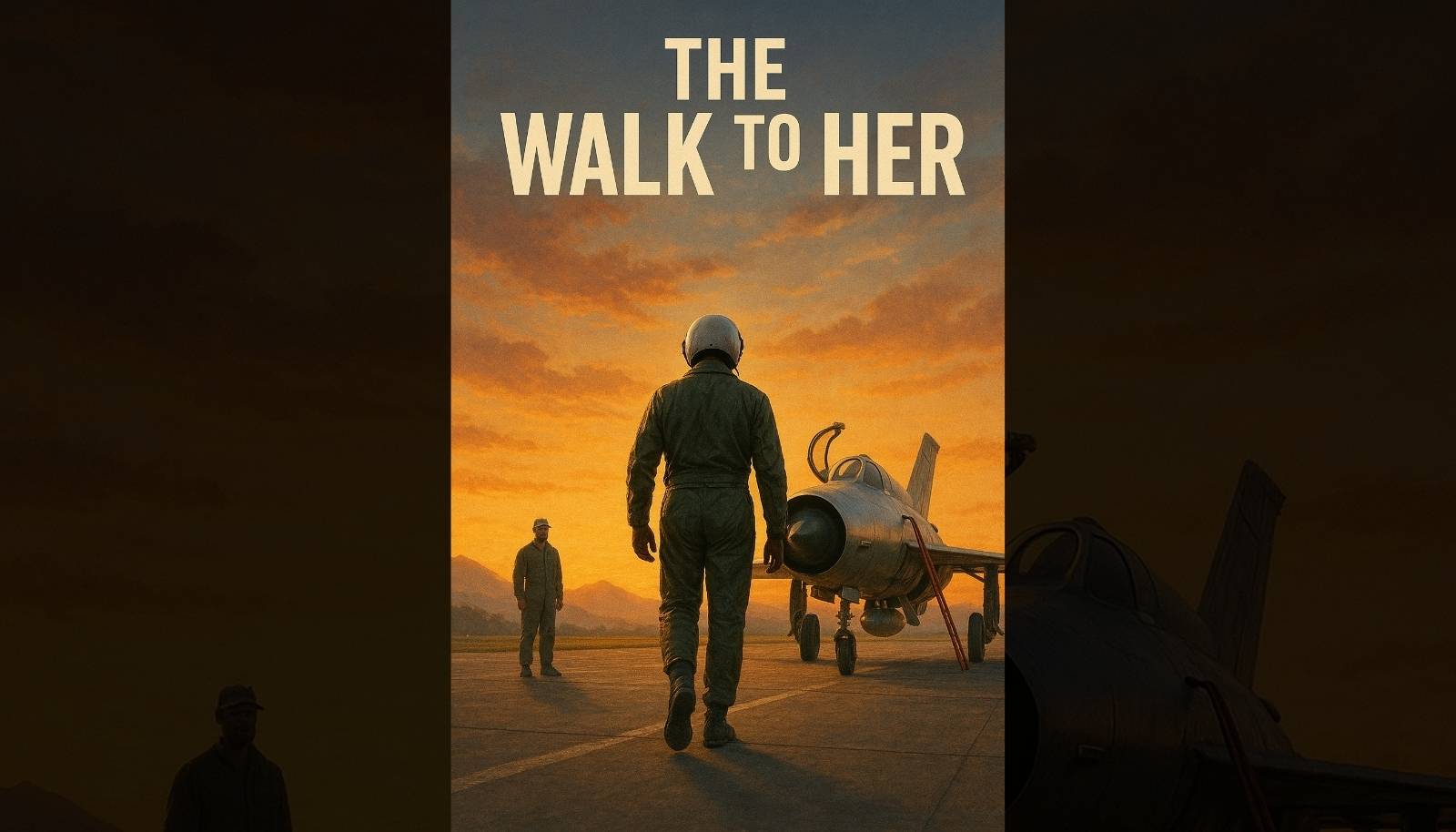
There she was — my MiG-21. Standing on the tarmac, nose pointed toward the horizon, as though impatient for the sky. The morning sun glinted off her skin, a sheen of steel that carried the ghosts of a thousand missions. Her slender fuselage and razor-delta wings gave her the look of a predator coiled to strike. Not graceful in the way of modern jets, no. She was raw, elemental, beautiful in the way a drawn blade is beautiful.
The world around her seemed to blur. The bustle of technicians with their spanners and checklists, the distant growl of another jet testing its engine, even the faint cry of kites circling above the airfield — all faded until only she remained.
I began to walk.
Each step was deliberate, heavy with awareness. The soles of my boots struck the concrete in a rhythm that echoed in my chest. The air was thick with scents only a flight line could carry: kerosene hanging like incense, hydraulic oil with its metallic tang, the faint aroma of scorched paint from exhausts. Every breath I drew seemed to anchor me deeper in this ritual.
Two young airmen, barely older than I had been when I entered the Academy, stood guard at her wingtips. Their eyes followed me with a mixture of respect and curiosity, as though silently reminding me that I carried not just my own pride, but theirs too.
“Ready for her, sir?” one of them asked, his voice breaking slightly.
I paused, looked at the jet, then back at him. “No one’s ever really ready for her. You just learn to listen.”
They grinned nervously, shifting their weight, and I felt a surge of camaraderie — the invisible chain that bound airmen and pilots alike to their machine.
As I reached her nose, I stretched out a hand and let my palm rest on the cool, metallic skin. The surface felt alive, humming faintly with the stored energy of the Tumansky engine at rest. My fingers traced the rivets, and for a fleeting moment, I thought of all the hands before mine that had done the same — rookies, veterans, legends.
I whispered under my breath, words no one else could hear: Take me with you. Don’t let me down.
The ladder was already in place, angled against her side like a gangway to another world. The canopy lay open, gleaming like an invitation.
I paused, looking up at that familiar silhouette. Somewhere in the distance, I could almost hear Wing Commander Kapoor’s voice from our first day: Respect the machine. Respect the mission. Respect the sky.
I closed my eyes briefly. The boy from Guwahati rooftops flickered in my mind, his wide eyes tracking contrails across the sky, his heart pounding with dreams he couldn’t yet name. And here I was — at the edge of that dream, one hand on steel, the other reaching for the ladder.
Behind me, I heard Sergeant Ramesh clear his throat. “Sir,” he said, voice steady, “bring her back safe. We’ll be waiting.”
I turned, gave him a crisp nod, then set my boot on the first rung. The climb began.
The Covenant of Steel
The ladder clanged softly under my boots as I climbed, each rung carrying me higher into the covenant. The morning air was cool, laced with the damp scent of Assam’s tea gardens drifting faintly over the eastern breeze. Beyond the base’s perimeter, I could see them — neat, endless rows of green stretching like a quilt, dotted with the slow, deliberate movements of early pickers. And far beyond, as if keeping eternal watch, stood the mountains. Dawn had painted them in shades of rose and gold, their snow-tipped crests piercing the first rays of sun. They looked almost unreal — as though gods had placed them there to remind us of the scale of what we defended.
At the top of the ladder, Sergeant Ramesh steadied the rail for me. His hand — thick, oil-stained, strong — tapped twice against the fuselage. “She’s purring for you, FlyBoy,” he said with a half-smile, using the callsign my squadron had pinned on me only weeks before. “Don’t make her wait too long. ”
“Roger that,” I replied, forcing levity into my voice though my chest was tight. “She and I have a date with the sky.”
I swung a leg over and lowered myself into the cockpit. At once, the outside world dimmed. The MiG-21 cocooned me in her steel womb, intimate and unyielding. The seat was narrow, designed not for comfort but for combat. The harness straps hung like patient serpents, waiting to bind me. My gloved hands reached instinctively — over shoulder, across waist, down between legs. Click. Tug. Cinch. The webbing tightened across my chest with a firmness that felt like a test: Are you ready, FlyBoy?
The smell enveloped me — a potent mixture of kerosene, heated rubber, cold metal, and the faint musk of sweat from generations of pilots before me. Every switch, every dial, every gauge was scarred with use. This was no pristine machine. She was a veteran.
Ramesh leaned over the cockpit rim, his voice low as he handed me the flight helmet. “Sir, checklist complete. Radios hot. You’re clear to start when ready.”
I nodded, strapped on my helmet plugged it in with comms, reaching out to rest my hand on the throttle quadrant. For a moment, I didn’t move. Outside the canopy frame, I caught a last glimpse of the world — dew glinting off the grass, a pair of kites wheeling high above the runway, the silhouette of tea gardens and the mighty Brahmaputra shimmering silver in the distance.
Then I spoke the words every rookie dreams of: “ Tezpur Tower. Flyboy-
One; Request start-up.”
The radio crackled, filling the cockpit with its dry, familiar voice . “FlyBoy-One, Tezpur Tower. Start-up approved. Winds calm. Altimeter 29.89. You are number two in sequence. Acknowledge.”
“Copy, Tezpur Tower . FlyBoy commencing start ”, Sergeant Ramesh by now had disengaged the ladder .My thumb flicked the guarded switch. A whine began low behind me — the sound of the Tumansky R-25 engine waking from its slumber. The cockpit trembled as air spooled through the compressor. Then, with a cough and a flash, the beast roared alive. The growl rose into a thunder that shook my bones. Needles on the dials leapt, stabilizing into their ordained places. The canopy frame vibrated. My heartbeat matched her rhythm.
“RPM rising… EGT stable…” I murmured, half to myself, half to her. Through the headset, I caught the chatter of ATC : “Eagle Two, taxi to holding point Alpha… maintain spacing.” “Copy that, Tower. Eagle Two taxiing.”
For a moment, I let the voices wash over me, blending with the thunder of the engine. Outside, the dawn had fully broken now. The tea gardens glowed emerald, the mountains were ablaze in golden fire, and the Brahmaputra shimmered like molten glass. Yet inside, a strange hush settled — that surreal calm before motion, before flight.
Ramesh gave me a final thumbs-up from the ladder, his face a mixture of pride and quiet worry. He leaned in close, headset pressed to one ear, shouting over the Tumansky’s rising whine:
“Bring her back safe, FlyBoy. She’s more than a machine — she’s your wings.”He slapped the cockpit rim twice — the old ground crew ritual, part blessing, part reminder — before straightening. With a practiced motion, he raised his hand in salute.
I returned the salute briefly, eyes locking with his. In that fleeting moment, no words were needed. His hands had nurtured this jet through the night, checking every rivet, every panel, every valve. Now he was entrusting her to me.I reached for the canopy lever on the left side. The perspex dome arced down smoothly, the familiar hiss of the pneumatic seal engaging. With a solid clunk, it locked into place.
The outside world — shouts of the ground crew, the smell of damp grass and AVTUR, the Assam dawn itself — dimmed instantly, replaced by the cocoon of the cockpit. The sound of the Tumansky engine was no longer raw thunder but a heavy, vibrating growl reverberating through the seat and into my bones.
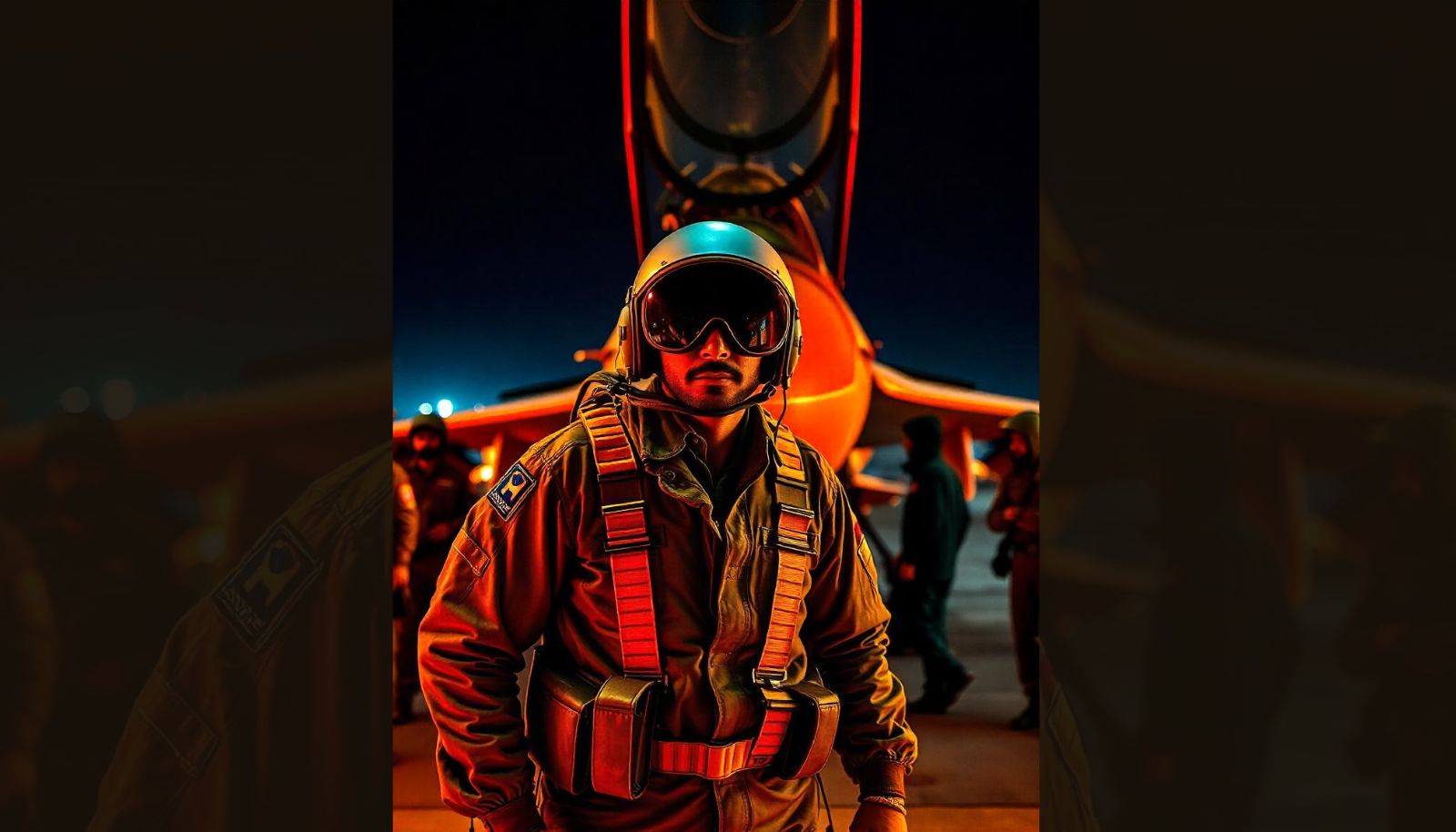
I adjusted the harness once more, pulling the straps tight across my shoulders. The cockpit was warm already, beads of sweat forming at my temple. My oxygen mask hissed softly as I tested the seal. The radio crackled to life, clear now inside the bubble: “FlyBoy-One, Tezpur Tower. Confirm ready for taxi.” I flicked a quick glance across the instruments — RPM stable, EGT in limits, hydraulics green, fuel flow steady. My hand tightened on the throttle.
“Tezpur Tower , FlyBoy-One. Ready for taxi . ” In that instant, the transition was complete. The ground crew had done their part. Now, everything was in my hands. Ramesh’s salute faded into the shimmer of the dawn as I reached across the cockpit, adjusting the straps one last time until they bit into my shoulders and thighs. The Tumansky R-25’s low growl filled the airframe, steady now, vibrations running up through the seat pan into my spine. The world outside was a muted blur through the canopy — technicians stepping back, dispersal crew moving the wheel chocks, a signalman with paddles raised in readiness. Inside, it was just me, the jet, and the ritual of preparation.
I flipped the intercom selector. “ Ramp, FlyBoy-One. Engine stabilized. Requesting chocks removed.” The ground crew chief’s voice came back in my headset, tinny but firm:
“Chocks out, FlyBoy-One. Brakes check.” I pressed the toe brakes. The MiG shuddered slightly, but stayed obediently in place. “Brakes holding. Copy chocks out.” The marshaller ahead swung his paddles outward, then gave the universal thumbs-up. I answered with a crisp nod from the cockpit. Time for the run-up. My left hand eased the throttle forward. The Tumansky’s whine sharpened into a howl, RPM climbing, EGT following. The cockpit rattled as the jet strained against the brakes.
“RPM… eighty-five percent… EGT steady… hydraulic pressure green… AC generator on line…” I murmured, eyes flicking across the instruments. Satisfied, I throttled back to idle. The jet settled, its roar subsiding to a deep, hungry growl. The radio crackled to life.
“FlyBoy-One, Tezpur Ground . Report readiness to taxi.” I keyed the mic. “Tezpur Gorund , FlyBoy-One. Checks complete, systems green, ready for taxi.” “ FlyBoy-One, Tezpur Ground; Roger. Taxi to holding point Alpha via Charlie. Number two in sequence, behind Eagle-Two.”
“Roger, Tezpur Ground . Taxiing to Alpha, number two behind Eagle-Two. FlyBoy-One.”
I switched to ground frequency. “Tezpur Ground, FlyBoy-One. Brakes released. Commencing taxi.” “FlyBoy-One, Tezpur Ground. Taxi approved. Hold short at Alpha .” Outside , the marshaller rotated his paddles, pointing toward the taxiway. Slowly, carefully, I nudged the throttle forward. The MiG began to roll, nosewheel shimmying slightly before settling into a straight line. The dispersal apron gave way to the taxiway, painted centreline guiding me forward.
Through the canopy, I caught one last glimpse of the ground crew. Ramesh stood at the edge, hands behind his back, his eyes fixed on the MiG until I was well past him. That look stayed with me — not pride alone, but guardianship, as though he had handed over not just an aircraft, but a part of himself.
The cockpit lights glowed, instruments alive. The canopy fogged briefly from my breath before the vent cleared it, leaving only my reflection staring back. A boy’s face, yes — but framed in helmet and visor, he was also something else now.
My hand tightened on the throttle. I whispered to myself, to her, to the sky beyond the mountains:“Time to dance.”