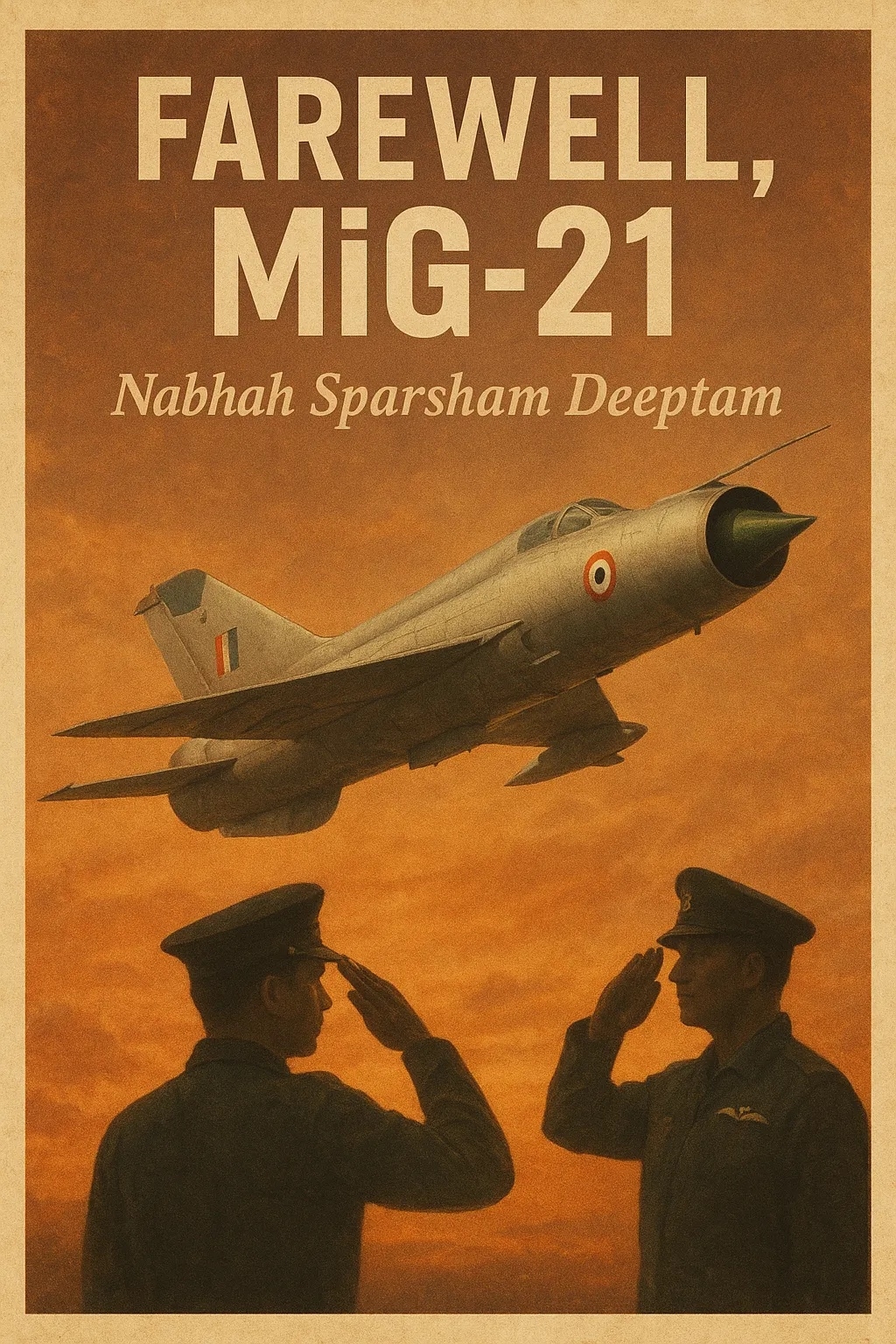
It all began at Tezpur.
I was barely more than a boy in uniform then — a freshly minted Pilot Officer, still carrying the smell of parade grounds and classrooms from the Air Force Academy in Hyderabad. My wings had only just been pinned on my chest, glinting with promise, but inside I knew I was still untested. The Academy had taught me the theory of flight, the basics of combat maneuvering, the discipline of an aviator’s life. But as every fighter pilot before me knew, true baptism came only in the cockpit of the MiG-21 at Tezpur’s MiG Operational Flying Training Unit (MOFTU).
Stepping off the rickety service bus that first morning, kit bag slung over my shoulder, I looked up and saw the base at Tezpur stretched out before me. The runway shimmered in the soft Assam sun, dew still clinging to the grass. Beyond the perimeter, the mighty Brahmaputra River wound its endless silver course, glinting like a serpent in the light. And to the north, as if keeping eternal watch, rose the mountains of Arunachal Pradesh — snow-tipped sentinels, their peaks vanishing into clouds. The sight struck me with awe. I had seen those mountains on maps and briefing charts, but here, standing on that tarmac, they loomed like silent guardians, reminding us all of the fragility of borders, of the nearness of adversaries, of the unspoken duty that hung over Tezpur.
Tezpur was no ordinary airbase. Every cadet knew its weight in history and geography. Nestled in Assam’s green heart, it was the frontline of India’s eastern airpower, staring directly into the vast, turbulent expanse of Tibet and the dragon’s shadow beyond. The 1962 war with China was still a story told in mess halls, and Tezpur had lived through it. The scars of that history were everywhere — in the hardened shelters, in the caution of the sentries, in the reverence the locals held for the men in blue who guarded their skies. This was not just another posting. This was where the nation’s frontier began.
I still remember the words of my flight commander, a grizzled veteran of countless sorties, as we rookies assembled for our first briefing at MOFTU:, Wing Commander Arvind “Sentinel” Kapoor, spoken on that crisp Tezpur morning as we rookies assembled for our very first briefing at MOFTU.
Tezpur was unlike any other station. It was not just an airbase — it was a frontier outpost of destiny. The air carried with it the tang of jet fuel, mingled with the scent of damp earth and wild bamboo drifting in from the Brahmaputra plains. Outside, the mist clung low, stubbornly refusing to lift from the tarmac, while the jagged silhouettes of the Arunachal mountains stood like silent guardians in the distance. Those peaks seemed eternal, watching generations of air warriors come and go, as though weighing each one of us in their cold, unblinking gaze.
The briefing room was plain, almost spartan, but it breathed history. The wooden floorboards bore the scuff marks of boots that had marched in and out for decades. Maps of the Eastern sector — faded, patched, and annotated with countless notes — lined the walls. Above them hung black-and-white photographs of pilots long gone, MiG-21s frozen in mid-roll, faces that stared back at us with a mixture of pride and warning. At the far end stood a chalkboard covered in aircraft silhouettes and training grids, its corners chipped from years of use. A faint buzz came from the overhead tube lights, and the ceiling fans ticked in lazy circles, but none of us rookies noticed.
We sat there, side by side, a band of strangers bound by the same set of wings. The camaraderie had already begun to form — nervous smiles, whispered jokes, elbows nudging under the table — the kind of raw brotherhood that only rookies share when they know they’re about to be thrown into the same crucible. We were a strange mix: some brimming with bravado, some quiet and observant, others stealing glances at the veterans’ photos on the walls, wondering if our own faces might one day join them. Beneath all the chatter, though, was the same current of tension: pride laced with a gnawing awareness that we were stepping into something much larger than ourselves.
And then he entered.
Wing Commander Kapoor — our Flight Commander, our gatekeeper to the skies. The room fell silent instantly, as though an unseen switch had been thrown. He was a tall, imposing figure, his frame still athletic despite years in the cockpit, his uniform carrying the faint wear of constant flying. His close-cropped hair was peppered with grey, his jaw strong, etched with a scar that hinted at battles untold. But it was his eyes that stilled us — deep, unwavering, the kind of eyes that had seen tracer fire arch across black skies, that had stared at radar screens with heartbeats counting down, that had known the thin line between survival and sacrifice.
They called him “Sentinel.” A call sign not given lightly. He had earned it in the unforgiving crucible of operational flying, always the one to watch over his formation, the one who brought his men home even when chaos reigned in the skies. The name carried weight, whispered with respect in mess halls from Srinagar to Sirsa. To us rookies, it felt like a mantle of iron.
When he spoke, his voice was calm, clipped, deliberate — each word chosen with the precision of a man who understood the power of words as much as the power of action.
“Gentlemen, welcome to Tezpur. Out here, you are not just pilots. You are the sword arm of the Indian Air Force. The skies you will fly in are the same skies your predecessors defended when the odds were impossible. Remember — the mountains don’t forgive mistakes, the MiG doesn’t forgive carelessness, and the enemy won’t forgive weakness. Respect the machine. Respect the mission. Respect the sky.”
The words landed with the weight of scripture. For a heartbeat, no one moved. You could almost hear the rustle of the mist against the windows outside. We sat frozen, absorbing every syllable, as though afraid the meaning might slip away if we blinked.
In that silence, I glanced at my fellow rookies. The brash ones now sat straighter, their bravado tempered. The quieter ones nodded almost imperceptibly, as if affirming some unspoken oath. One of my coursemates, who had been scribbling nervously in his notebook earlier, simply put his pen down, his hand trembling slightly. And I felt it too — a knot tightening in my chest, not of fear, but of awe. We were being inducted not into a squadron, but into a lineage, a legacy written in sweat, fire, and sacrifice.
Wing Commander Kapoor didn’t smile, didn’t soften, didn’t seek applause. That was not his way. His purpose was clear: to strip away illusions, to ground us in truth, and to remind us that from this day forward, our lives belonged as much to the sky as they did to ourselves. Yet, beneath the sternness, there was an unmistakable glimmer of guardianship. He was hard because he cared. He was demanding because he knew what the world outside demanded of us.
That morning, in that briefing room at Tezpur, with the mist curling beyond the runway and the mountains watching silently from afar, we rookies were no longer just young men with new wings. We had become part of something eternal. And standing before us, unyielding and immovable, was the Sentinel — the man who would shape us into warriors of the sky.
Those words stayed with me, etched deeper than any manual or textbook.
The mess at Tezpur was alive with voices of seniors, men who had fought in ’71, some who had stared across the border during tense standoffs. For us greenhorns, their presence was humbling. They spoke little, but when they did, it was with a gravity that weighed more than medals. At dinner one evening, a Wing Commander leaned toward me, eyes narrowing as he sipped his rum.
“Rishi, remember this — the MiG is a stern teacher. She will not forgive arrogance. But if you give her respect, if you fly her with discipline, she will turn you into a fighter pilot.”
I nodded silently that night, unsure if I was ready. But in my heart, I knew I wanted nothing more than to prove myself worthy of that trust.
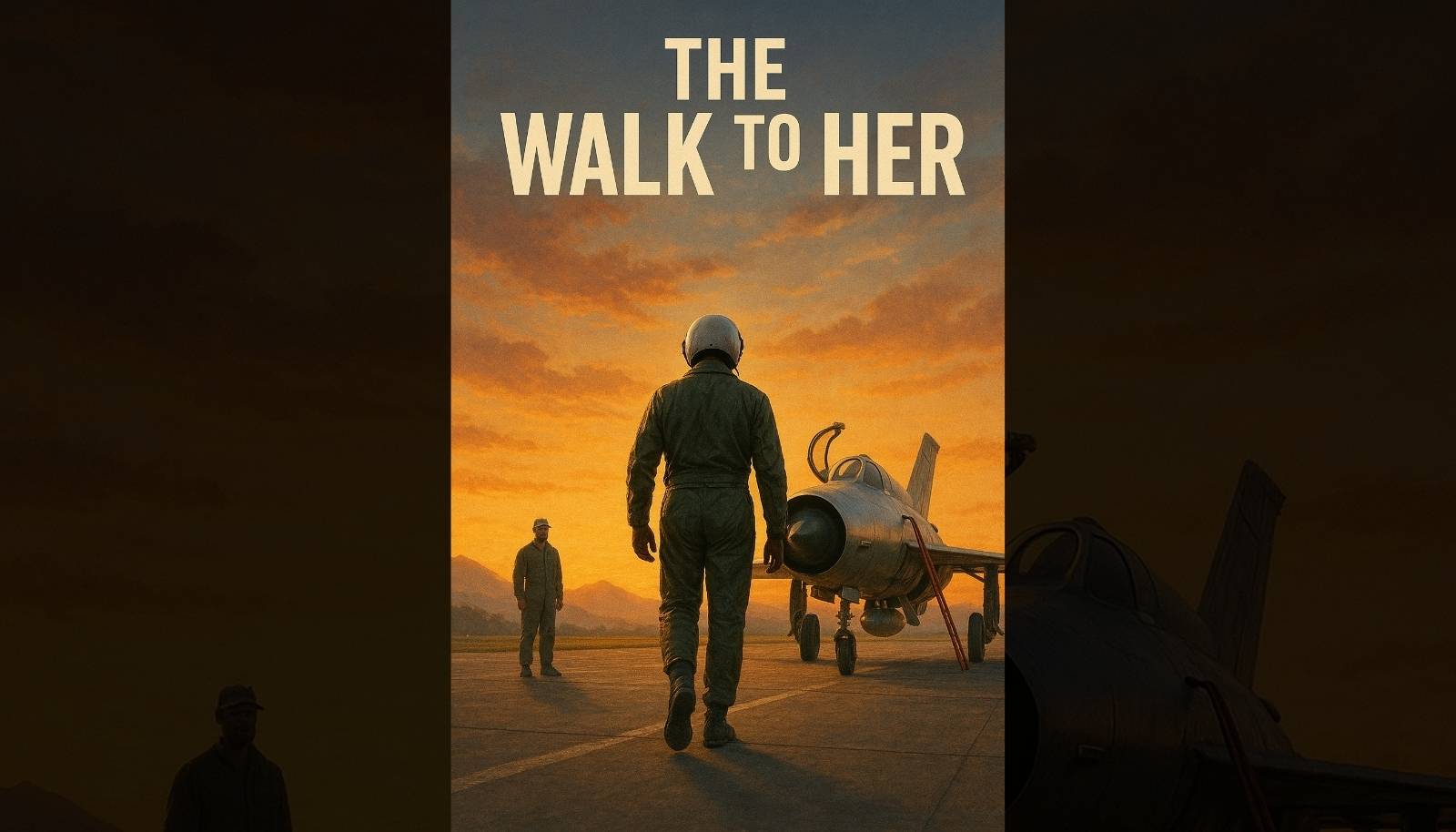
And then came the morning when I first walked out to her — the MiG-21.
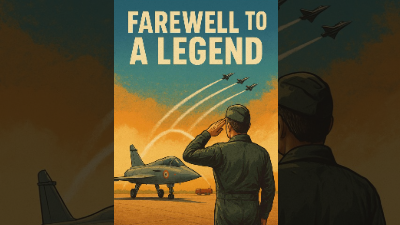
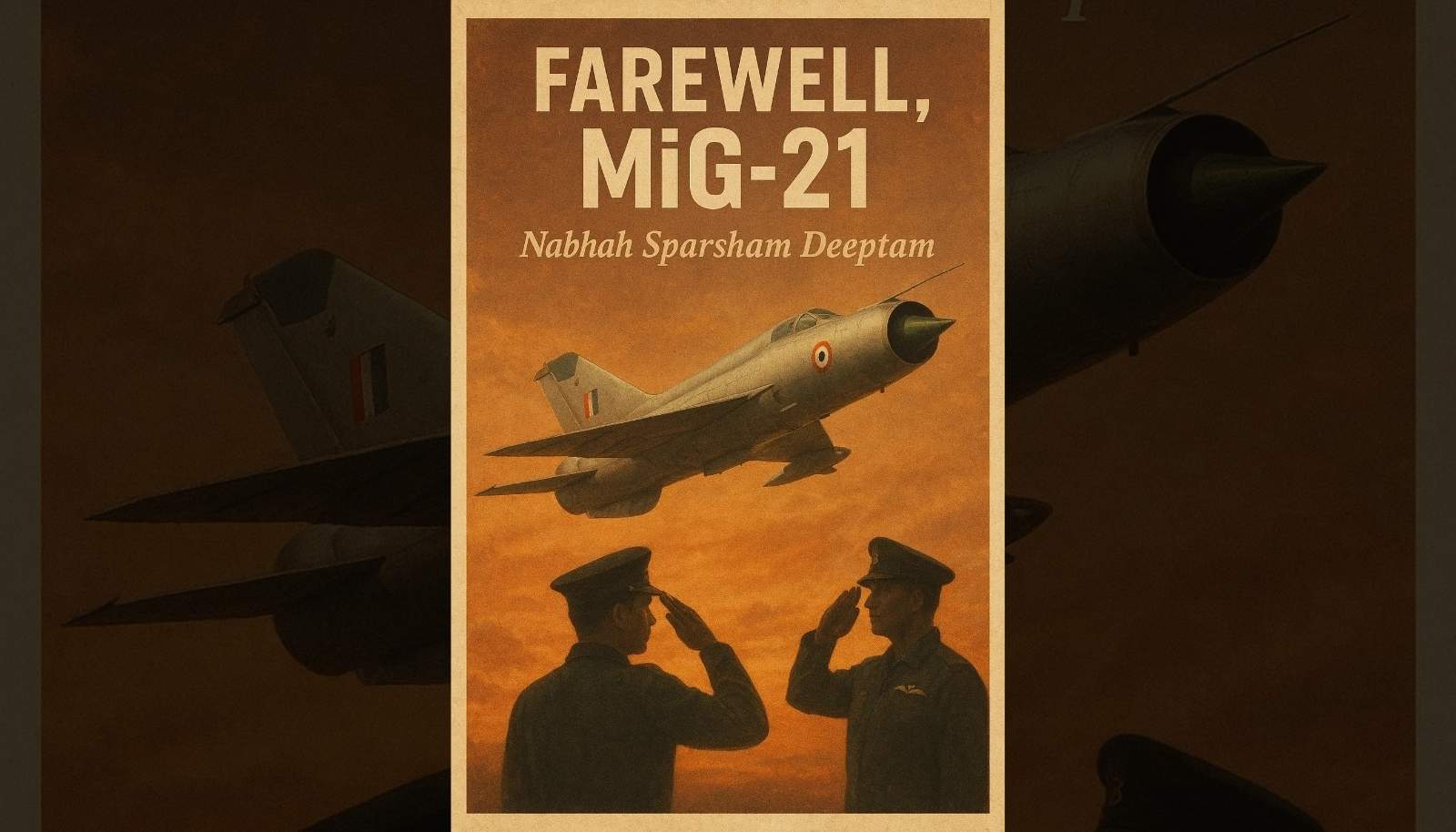
She stood on the tarmac, her nose pointed to the horizon, her wings sharp as blades. To most outsiders, she looked small, almost dated — just a slim, dart-shaped interceptor with a single engine. But to us, she was legend. She was the machine that had won dogfights against Sabres in ’65, torn through enemy formations in ’71, and screamed through the valleys of Kargil. She was the rite of passage for every Indian fighter pilot worth his salt.
As I climbed the ladder to the cockpit, my gloved hand brushing against her cold fuselage, I felt the weight of history. The cockpit smelled of kerosene and sweat, the scent of countless sorties flown before me. The straps bit into my shoulders as if to test my resolve. For a fleeting second, I thought of my parents back home in Guwahati, of the boy who had once stood on the roof of his house staring at jets streaking overhead. That boy had dreamt of touching the sky. Today, that dream sat strapped into a MiG-21 at Tezpur.
The Tumansky engine roared to life behind me, a deep growl that rose into thunder. The vibrations shook my bones, the canopy rattled, and my heart thumped in rhythm with the machine. I could hear my instructor’s calm voice crackle through the headset, but the words were drowned out by the symphony of power. I eased the throttle forward. The runway blurred. The wheels left the ground.
And then — silence. The world below fell away. The Brahmaputra became a glinting ribbon. The mountains stood vast and eternal. The horizon stretched endless. And in that moment, I was no longer just Rishi Parashar.
I was a fighter pilot.A guardian of the frontier.A rookie no more.Tezpur had given me my wings all over again. And the MiG-21 had baptized me in fire.